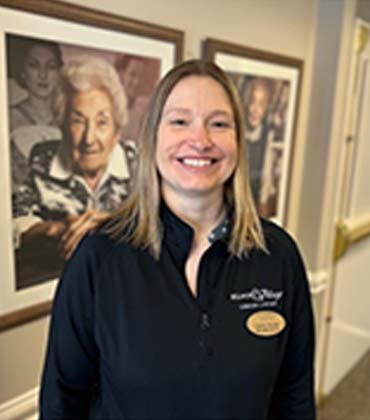
Carrie Petrelli is the Director of Activities and Memory Care at Belmont Village Senior Living. With 14 years in healthcare social work, she has held diverse positions. Daughter of a hospital administrator, Petrelli envisioned contributing to healthcare early in her career. She worked as a social work case manager at Chicagoland Hospital System, later becoming a Board-Certified Case Manager and Licensed Clinical Social Worker. She transitioned to independent contracting as a clinical therapist in senior living communities before shifting focus to leadership. Recently, Carrie was promoted to Director of Activities and Memory Care at Belmont Village Senior Living.
Early Calling in Social Work
The field of social work offers many specializations. Early in graduate school, I knew I wanted to work in healthcare as a clinician. My father was a hospital administrator and I always felt at ease in hospital settings. I began my career in 2011 as a registry, on-call medical social worker. Though moving from unit to unit could be frustrating, I viewed it as an opportunity to learn and explore my interests. I found myself drawn to working with patients and families facing complex rehabilitative needs due to illness, injury or stroke.
Navigating healthcare can create stress and vulnerability for patients and families. Challenges such as language barriers, limited access and insurance restrictions often complicate the discharge process. Many families face financial strain when continuity of care is needed but not fully covered. These experiences fueled my passion for advocating for patients and families, particularly during transitions from hospital to home.
My passion for working with seniors grew stronger as I observed how the right environment and programs could enhance quality of life, particularly for residents with dementia-related conditions.
In 2023, I decided to focus on leadership in senior living and joined Belmont Village Senior Living as a Memory Program Director in training. Today, I enjoy combining my clinical and leadership experience to partner with residents and families, mentor staff and promote aging in place with dignity.
Helping Geriatric Communities with Memory Impairments
Training must be based on evidence-based practices. Any community serving residents with memory impairments should be flexible and committed to both residents and their families. Staying current with Alzheimer’s and dementia research ensures staff can provide the most effective interventions to improve quality of life.
Professionals should remember that senior living is about both healthcare and hospitality. It is a fast-paced and growing industry. Patience, strong interpersonal skills and an operational mindset are key for long-term success.
Programs and care plans should always be personalized and evolve with each resident’s changing needs. Staff must understand that behaviors associated with dementia are symptoms of the disease, not intentional actions. A compassionate, calm approach is essential.
Regardless of disease progression, residents deserve opportunities to socialize, participate and enjoy life. They should always be treated with dignity and personhood. Aging in place and person-centered care are only possible when communities remain adaptable, continually partnering with residents and families.
Challenges Faced in the Senior Living Sector
Like many areas of healthcare, staffing shortages remain a challenge. Shortages can affect quality of care and increase caregiver burnout. At Belmont Village, we are proud of our high staff longevity and culture of mutual trust. Many employees have been with us for over 15 years. We foster teamwork through transparent communication, shared events and collaboration. While no organization is perfect, we strive to preserve dignity for both staff and residents.
Another pressing challenge is the financial burden that families face when considering senior living or higher levels of care. Hospital discharge planning often leaves families with limited time to make difficult decisions. Costs for 24-hour caregivers or senior living can feel overwhelming, adding to the stress of navigating dementia or other chronic conditions. Transitions can also trigger guilt among family members or depression in residents.
Our role is to partner with families, guiding them through these challenges. Both sales and clinical teams work closely with residents and families to provide support and options. While financial pressures will always be delicate, acknowledging them with compassion and transparency helps build trust throughout the resident’s stay.
Future of Memory Care and Senior Living
I expect advancements in artificial intelligence to greatly impact clinical management, safety and resident engagement. For residents with dementia who lose the ability to advocate for themselves, AI could help track behavior trends and provide deeper insights into care needs. Many communities already use AI sensors for fall detection and prevention, allowing staff to respond quickly and develop prevention strategies.
Virtual reality is also being used to train staff by simulating the experience of living with dementia. As AI and VR evolve, I anticipate even more innovative applications that enhance care and support tailored responses from staff.
While technology holds promise, it must always be evidence-based and ethically implemented. With rising life expectancy and earlier dementia diagnoses, the need for innovation will only increase. Global research and advocacy efforts, such as those led by the Alzheimer’s Association, will continue to expand, contributing to earlier detection and improved approaches to memory care.
Thriving in Healthcare Social Work
I have found senior living, particularly at Belmont Village, to be one of the most rewarding fields in healthcare. Seeing residents thrive despite disease challenges is inspiring.
Professionals should remember that senior living is about both healthcare and hospitality. It is a fast-paced and growing industry. Patience, strong interpersonal skills and an operational mindset are key to long-term success.
Adaptability is also essential. Throughout my career, I have learned to grow through each experience, which has strengthened my emotional and business intelligence. Effective communication with staff, residents, families and vendors is another critical skill.
Finally, it is vital to find an organization whose mission and values align with your own. Believing in the vision of your company strengthens commitment and fuels creativity. Alignment between personal values and organizational goals ultimately shapes professional fulfillment and success.